June: in like a lion and out like a lamb, just like the weather in March.
Ella is at Appalachia Service Project, serving in Dickenson County. Teams like the one she’s with travel to Central Appalachia from around the U.S. to repair homes in some of the most beautiful country in our land.
She will never be the same – because of the opportunity to serve, because of the worship, because of the people and their stories, and because she’s never gone this long with limited cell service. I am so ridiculously proud of her.
Ella and teammates working on flooring.
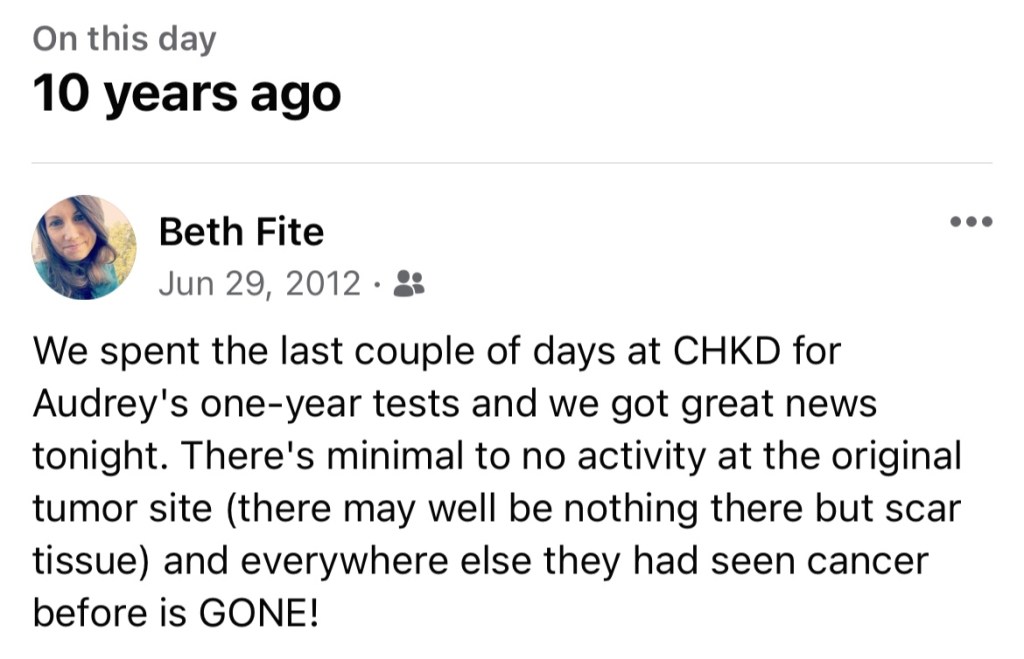
Today, Audrey has been cancer-free for an entire decade. A decade. It was and is just an unbelievable glorious gigantic miraculous miracle.
My favorite Facebook Memories moment.
About a week ago, one of Ella’s pals shared a moment she captured on Ring Dance night that she forgot to send, and it’s just *the* most adorable thing. It was a really windy evening and this picture captures that, along with the looks of happiness that young people have on their first big night as kind-of adults.
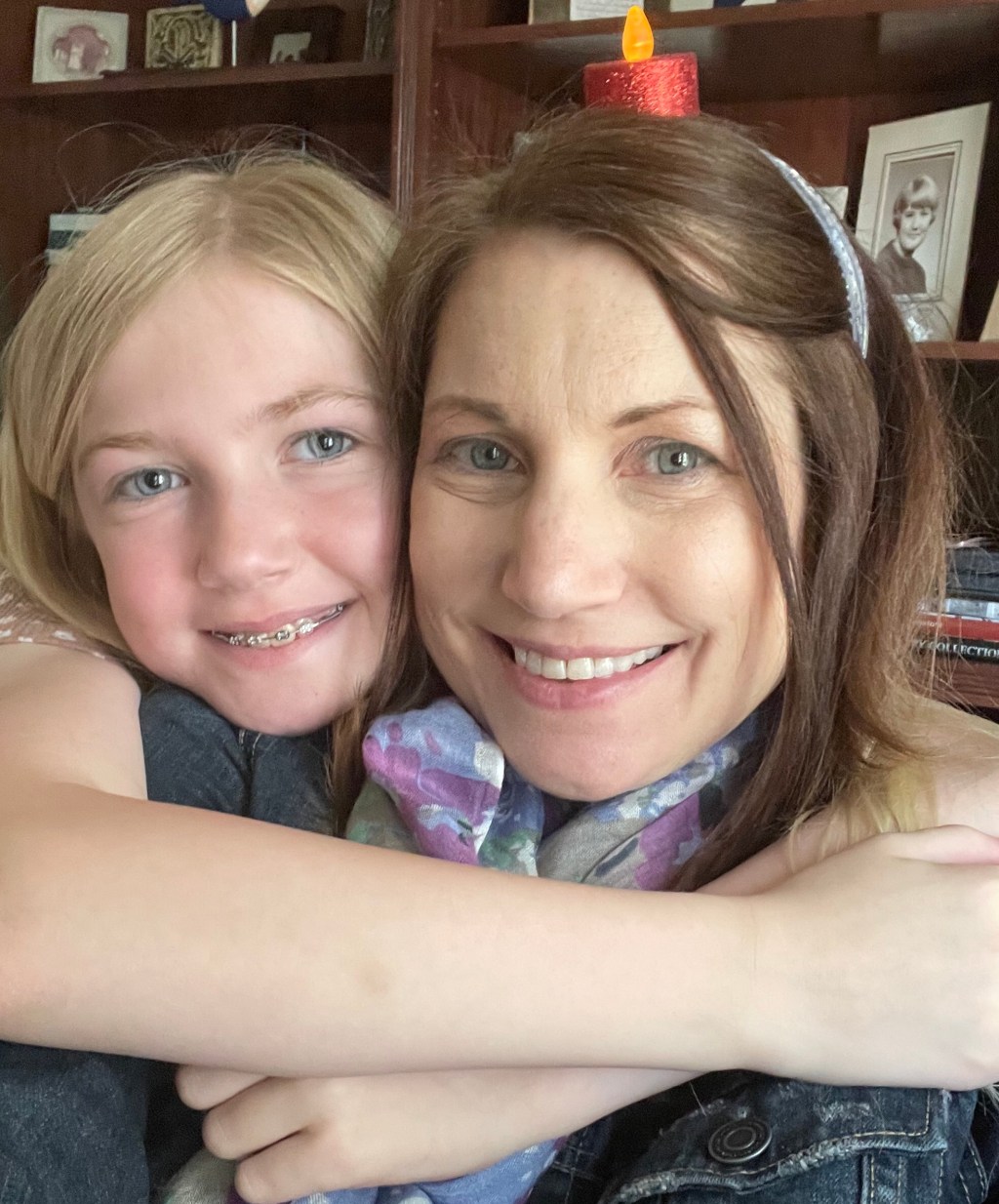
I love these smiles.
At the trampoline park, Audrey encouraged a room full of kids to line up boys against girls for dodgeball – and then talked serious 5th/6th grade trash. I loved every minute of it. Girls won.
That look!
I had my mammogram this month, in the month I hate to have doctor appointments. There’s no picture of this. The follow-up letter informed me my breasts were dense but fine. I’m not sure how I feel about them being called dense, but I’m considering it a win that I didn’t get something in writing that called them saggy.
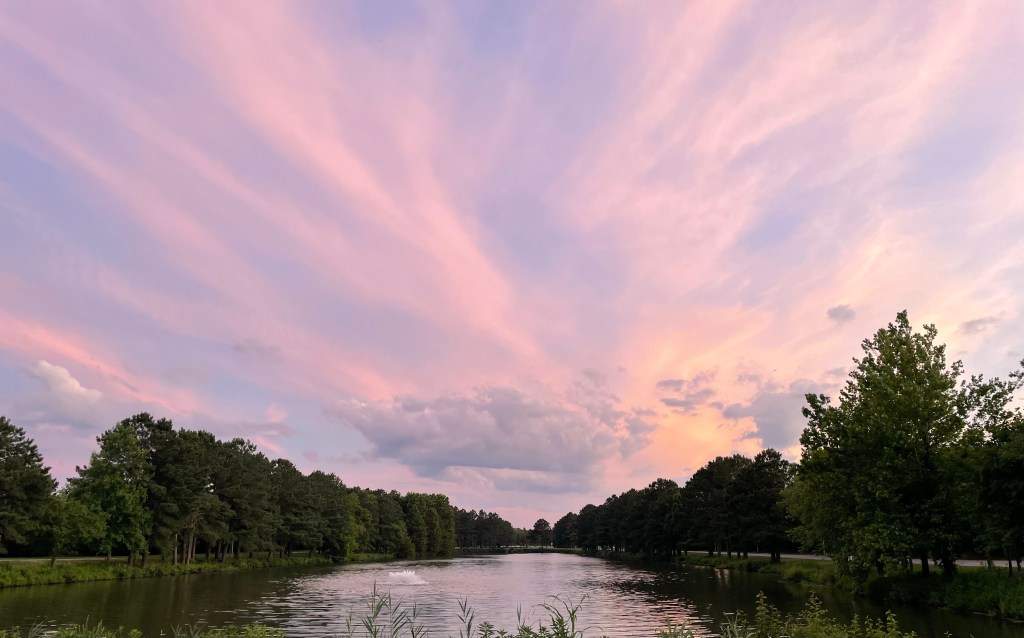
June sky on one of those nights I was anxiously waiting for test results.
My parents had their 50th wedding anniversary and we all celebrated under the big tree in my sister’s yard. I love that tree, and it’s lesson that deeply planted roots result in abundant life and growth.
Two seconds later he gave her rabbit ears and she rolled her eyes.
Pancakes played Fortnite from the pink gaming chair that is Audrey’s throne. She loves when the girls are home to play all day, but she gets far fewer treats now that Audrey is here all day monitoring my every move. Cute cuddly things need treats!
Princess Pancakes Sassypants
Even the cats got along this month. While Henry Fonda always loves Katherine Hepburn, Kate rarely loves Henry and generally delights in bullying him.
A rare moment when Kate tolerates Henry’s affections.
June was good. The angsty minefield month is finished, and it was really, really good. I am ridiculously blessed, and thankful to Him who is able to do far more abundantly than all that I ask or think.
I don’t love the month of June. It always brings the chaotic last two weeks of school, which seems fun but really means standardized tests, World War III because of a dwindling supply of the good lunch box treats, and someone telling me at 4:46 pm that by 6 we have to be dressed and at a very important ceremony I’ve never heard of.
June also is a month of anniversaries, and while most of them are good the ones that aren’t good are so overwhelmingly not good that my body and mind still have a physical reaction every time I turn the calendar and see June 1. I struggle to sleep, I struggle to concentrate, and my heart races or I break out in a sweat at the slightest disruption in schedule or routine. Eleven years ago in June, the world just exploded when one doctor appointment after another revealed that Audrey would be born with cancer, then needed surgery, and then and then and then. And even though I know that the story has a happy ending, June is filled with trepidation for me. A minefield I have to carefully navigate each year.
This morning I got dressed up for church even though I really wanted to wear black joggers and my Nikes. I was hoping the perpetual pit in my stomach might wane if I could feel “together” and be in a place of worship. I have been reminding myself that it’s National Cancer Survivors Day and I should be celebrating the miracle of Audrey, but I didn’t remember that it’s Pentecost until I arrived at church.
On Pentecost we remember the day the disciples received the Holy Spirit. It’s a day for tongues of fire and baptisms and new experiences. In children’s church today, the kids all blew on their hands to experience and be able to easily remember that you while can’t see the spirit you can know it’s there because you feel it or felt it. And it struck me that my experience with a voice and a feeling over a decade ago is what I really need to remember as I go through this month.
When Audrey was just three months old, some of her test results came back with concerning indicators. Her oncologist asked that she come in the next day for full scans and bone marrow testing, and the pit in my stomach seemed bigger than it had ever been. That night, after she’d received her injection in preparation for the next day’s scans, I was sitting in my favorite chair in the family room and I heard a quiet male voice say you can trust me. I looked up expecting to see my Dad – I thought maybe he was still at our house and had not left to go home. But no one was there. I wondered for a minute about what had just happened and if I really was losing it, but I also realized in the moment that I was suddenly and unexplainably completely calm and at peace.
I remember the voice vividly in really hard moments, when I need it most I guess. But day to day as life happens, with all sorts of little frustrating moments or anxieties, I don’t think about it as much. I guess the truth is I rely on myself for as long as I can possibly stand it and then I really only rely on God when I fail miserably. Not good.
At the time, I told just a couple of people – in part because I didn’t want to seem crazy (she’s hearing voices now!), in part because not everyone around me believed in the God who I thought might be sending me a message, and in part – mostly – because I just couldn’t believe that someone as awful as me was worthy of a message. When the chips are really down, it’s easy to fall into the trap of thinking that what’s happening is your punishment or that God only loves and communicates with perfect people.
This June is a bit of an additional challenge because a couple weeks ago in my frustration with myself for still feeling unease about June, I decided that the way to cure that was to overexpose myself to scary things all month. For the first time in over a decade, I threw superstitious caution to the wind and scheduled doctor appointments and even my regular mammogram for this month. My Dad would call that ignorance gone to seed, but I’m calling it a long overdue and necessary trial by fire. (I’m only calling it that because I still don’t like it when my Dad is right and I am wrong.)
I loved every minute of this weekend’s Jubilee coverage. These are my faces when I realize I should have made different choices.
Perhaps if I rely on Him more, in all things whether big or small, I wouldn’t spend June in such a state of unease each year. Perhaps if I firmly resolve to focus on the outcome instead of the obstacle, I wouldn’t spend June in such a state of unease each year. Perhaps if I stop hiding pieces of me and just embrace that I am a mix of good and bad and all sorts of contradictions but God loves me anyway, I wouldn’t suffer in silence and spend June in such a state of unease each year.
I think one of the lessons of Pentecost is that the church is filled with believers that are human, people who’ve lied or doubted or panicked. People with imperfections. None of us is a surprise to God – He knows exactly who we are. It’s we that don’t fully understand who He is and how He works. As lights, as the church, perhaps we are at our best and most effective when we are honest with God and others about all the things that make us human and about all the experiences we have that are just unbelievable.
I struggle to be at rest when I don’t have things figured out or when I am overwhelmed. I don’t have to know the answer, but I need to at least identify the next step. What is the next right thing to do?
All week, my thoughts have been disorganized and full of feelings. Sadness. Despair. Frustration. Rage. And just as I was trying to focus on God and church and a sermon and peace this morning, I opened an email about our schools partnering with the city to remember the lives lost here 3 years ago – asking that “we reflect together on the essence of #VBStrong” – and it really triggered me.
The hashtag #VBStrong seriously pisses me off. We should not have to be strong. We are capable of taking steps to prevent the situations that result in these stupid hashtags.
I went back to my journal entry from three years ago and realized that absolutely nothing in this city or this country has changed.
Why can’t we start being strong in the areas that could help prevent these things from occurring? Why can’t we be strong when we vote, supporting candidates who support mental health care and background checks and reforms? Why can’t we be strong about a commitment to finding a compromise on gun control? Why aren’t we willing to put our strength into finding a compromise that shows that our commitment to life and quality of life is more important than our commitment to allow anyone to own any kind of weapon? Why are we just perpetually stuck in an argument about what we can and can’t have and what medical conditions we will and won’t help with, and then relying on each other to be strong when the guns we won’t give up end up in hands that kill our family members and our children and our neighbors?
We should all be horrified by and convicted by The New York Times Sunday Review cover today.
Our belief that gun violence won’t impact us personally may have been the original reason we were quiet, but at this point we must all accept and admit that our inaction and our selfishness and our obstinance got us here.
I am done with all the reasons for not talking about it right now, with all the reasons this is really mostly a mental health issue, and with whining and indignant quoting of the second amendment. Those are the actions of cowards – people afraid of losing money, people afraid of losing votes, people afraid of losing power or control, people afraid that they have been complicit. News flash: you, we, are complicit. Our inaction makes us complicit.
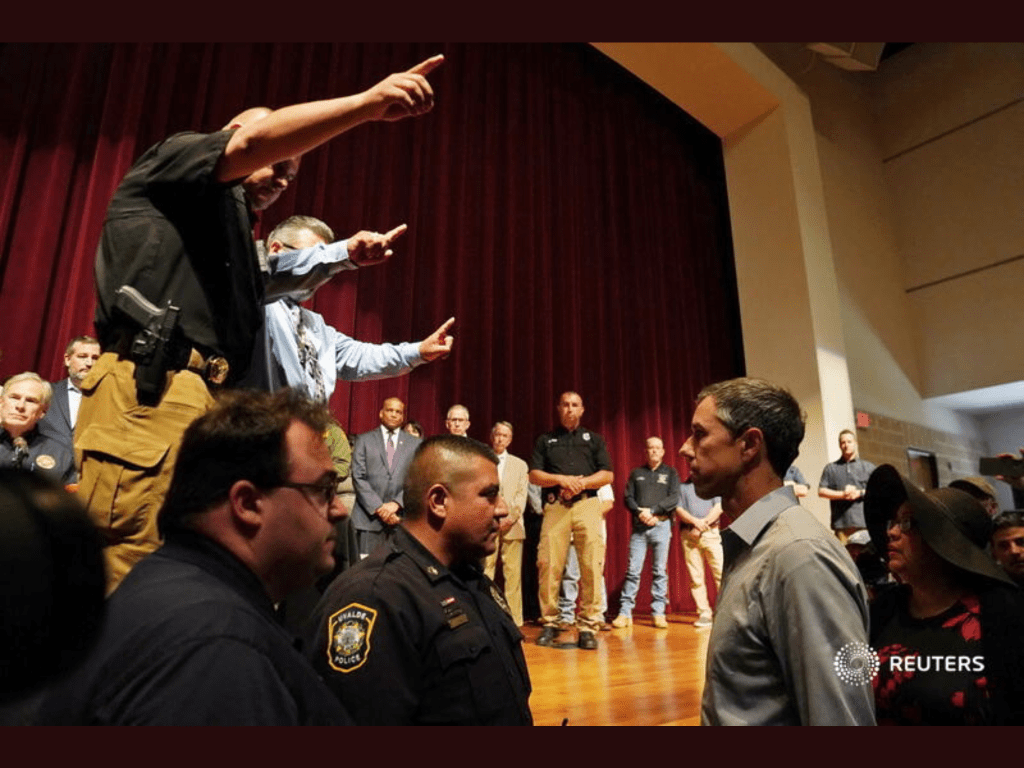
I don’t live in Texas and I have no idea if I agree with all the man’s politics, but I cried this week when I watched Beto stand up and call a thing a thing and call liars liars. There is no longer any right or appropriate time for these sorts of things. People – children – are being gunned down every day in schools, grocery stores, churches, movie theaters. I am so proud of this man in the moment captured in this photo.
Maybe he wants votes. Maybe he’s a Dad and heartbroken. Maybe both. Likely both. But this took some guts. He has a hell of a lot more courage than most of us – and we stopped him a hell of a lot faster than we stopped an armed 18-year-old in a classroom up the street.
I am a believer in the second amendment, the purpose of which was to ensure our ability to defend our country and our homes in the event of a tyrannical overtaking of our land or government. But we cannot be so afraid of compromise on finding regulations that we allow our own countrymen with AR-15s to tyrannically overtake our schools and our churches and our grocery stores and our peace.
Today Audrey and I visited Horton’s Cemetery to talk about what Memorial Day is really about, to honor the memories of such brave men and women, and to pray for all those who mourn. Some fought in World War II, some Korea, some Vietnam, some Iraq. Some were drafted and some volunteered. Some died young and some died old. I read the words of Abraham Lincoln etched in a wall of stone there: “Honor to the Solder, and Sailor everywhere, who bravely bears his country’s cause.”
Albert G. Horton, Jr. Memorial Veterans CemeteryAlbert G. Horton, Jr. Memorial Veterans Cemetery
What did they actually fight for? It wasn’t for our right to own an AR-15. It was so we wouldn’t need to live in fear of evil people who would wield weapons such as that against us.
We need to be strong right now and actually take steps in the direction of making America safer. We can march. We can write. We can donate. We can vote differently. We can speak differently. We can open our hearts and minds to finding compromise. We can try something. We can try anything.
In the words of David Hogg, a student survivor from Marjory Stoneman Douglas High School: “I can respect you have a different opinion than me on guns but I can’t accept that we can’t do anything to save our kids.”
Women’s History Month along with the launch of affinity groups at my company has me thinking about what it means to be a woman at work. The word woman is uncomfortable for me, primarily because I think it designates a grown-up and I still think of myself as a girl. In a meeting full of men and women, I look around the room and my brain processes my work family as a room of boys and girls – we are all still witty and fun, after all. But I guess if I had to choose how to characterize my affinity I’d say I’m more comfortable with the word female, because it doesn’t come with any implications about maturity.
I’m sure there are many things about working that are common to all of us regardless of our gender. So what, specifically, are the things that are unique to women? I’ve had a very privileged work life, and I’m keenly aware that I have not struggled in the ways so many have – I’ve never worked multiple jobs to survive, had a boss that was abusive, or lacked the safety net and help of family close by. But what I have experienced, what I have felt, are things like these…
I cannot possibly be everything to everyone all the time, and yet I must be. Perfectionism and the desire to succeed are deeply ingrained in me and I know that’s true of many people regardless of gender – but largely I see women connect work promotion to perfection, as opposed to consistent performance. That brings me to I must show I consistently make solid decisions based on data alone, because if I make decisions based on any sort of emotion that’s a “girl” thing to do. Which is crazy because the truth is all of our best decisions are always some combination of data, collaboration, experience and gut instinct (feelings).
The thing I am most afraid to say at work is I don’t know. I don’t know does not sound like an answer a leader gives, and I don’t think it’s an answer that women can give if they want to stay in a leadership role. I logically know it’s sometimes true for everyone, but it does not feel like this is OK for me.
Although this is the face I think I make when I don’t know the answer, I’m pretty sure I just have resting Beth face and I’m not sure which is better.
I judge myself the most harshly in the area of motherhood. My children are the most important people in my life and while it feels “right” and normal that my work family would know them so they can really know me, I sometimes fear others will see that I am winging this motherhood thing and have no idea what I am doing, and maybe they’ll think that applies to my work, too.
And that brings me to if people know I have children and see the whole me and know how important my children are to me, will they think I am not “all in” at work? Or if I take time to get the girls to the doctor and orthodontist or just to see them at a fun field day, will people think my work is not a priority? One thing I have noticed, and sometimes envied, about my male colleagues is that they largely don’t give reasons when they take off work. My female colleagues almost always do, as if we are making a bit of an apology – as if reasons have a ranking and we must have an “acceptable” reason to take the time we’ve earned.
If I felt like someone actively wanted me to fail, it was always another female. There are women who want all other women to succeed, even if they don’t particularly like a person, and there’s a kind of collaboration that happens with those women – I think because of an understanding that we can all grow and achieve more if more of us succeed. And then there are women who are so competitive or who so seek the attention of men that it feels like the progress made by the former group is diminished by the latter group, who behave in such stereotypical ways.
In order to get my point across I guess I am going to have to interrupt and repeat myself. However, if I do that will people see me as aggressive and/or bitchy? Maybe they will. Maybe I *am* sometimes aggressive and bitchy. (Actually no maybe there, I am.)
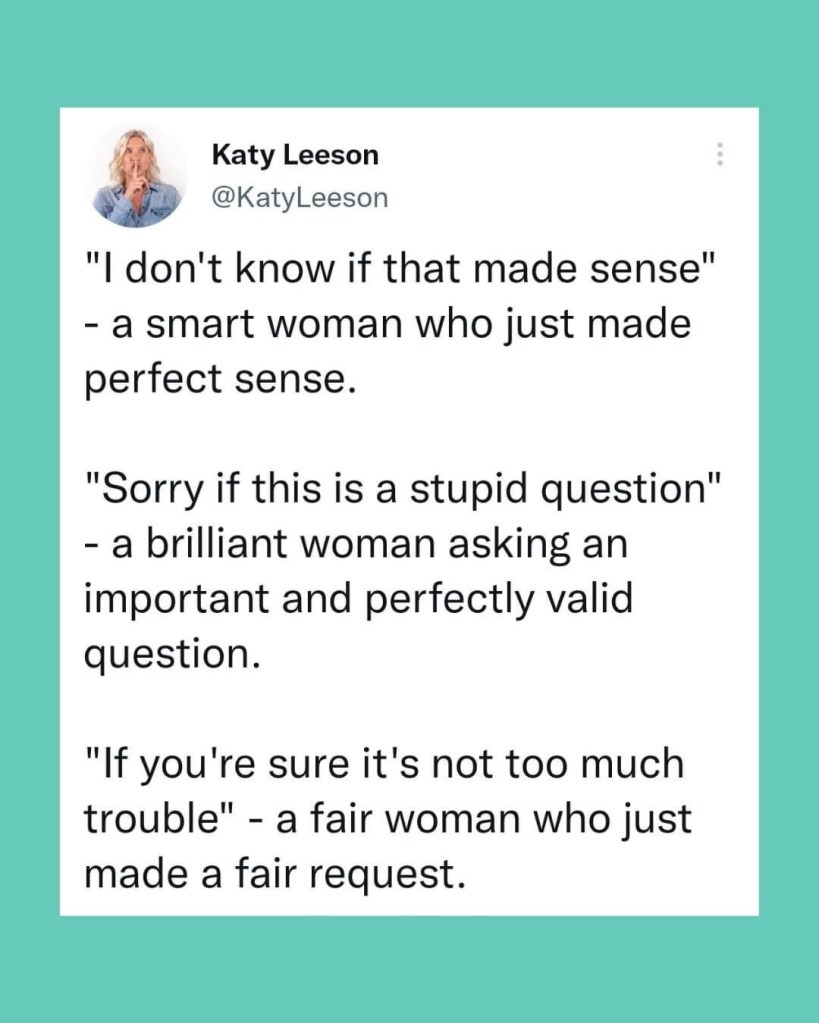
“I don’t know if that made sense,” said the smart woman who just made perfect sense.
I came across this tweet recently and it really convicted me. I am supposed to be a leader and an example, and I realized that I regularly use this line when I am uncertain if my idea will be well- received: “I don’t know if that made sense.” I guess it would be ok if I said that because I was feeling like maybe my idea was not logical. But I tend to say it when I am certain about what I am saying, but I think it may not go over well. Not good.
Are these sorts of feelings and thoughts even all about or unique to being female? I’m not sure. Perhaps men feel variations of them as well. Maybe the better question is why don’t we talk about this stuff more so our work environments can be places where we all feel safe to be ourselves, to be at our best?
There are so many behaviors we all have and assumptions we all make because of gender, I guess the main a-ha moment for me in this women‘s history month is that it’s not just men that have the assumptions and behaviors. People, not just women, must bring their whole self to work and be their whole self at work and embrace their whole self at work – even and especially when they have feelings like I don’t know. That means more men and women have to work hard to foster environments where everyone can do that. Where everyone can just be honest – that they are some sweet and some sour, some quiet and some loud, some smart and some clueless, some confidence and some insecurity, some strengths and some weaknesses. Perhaps the key to more successful businesses, family lives, relationships and equality in all of those arenas is environments where people feel free and confident to be themselves, so their best ideas can be spoken and acted on.
I spent the first 20 years of my adult life battling fear of one sort or another. What if this, what if that? How can this or that possibly work out? What am I going to do?
Born in the seventies, my childhood fears were pretty standard for the time: dolls having secret lives as killers, will I have a date for prom, and the Cold War ending in nuclear war. (Whoever designed the drills where kids hid under desks when missiles were on their way to the east coast clearly did not understand science or psychology.)
As the teen years turned into the adult years fears become a little more “rational.” At least adult fears were about things with some sort of likelihood of happening. By then I knew my face wasn’t going to peel off because of Poltergeists, so fears became about things like loss or failure or physical harm.
For a while in my early adult years I was irrationally afraid to fly, which was inconvenient and annoying because I flew with some regularity. A couple of scary flights (one when even the flight attendant was praying!) combined with 9/11 had me convinced that I would be on a plane that Karen Black had to save or that careened into the Potomac River.
By the time something actually scary happened, I was exhausted from dealing with stupid things and found myself in a real struggle to maintain confidence in God and myself. Three things specifically changed the way I think about fears and the way I react when I feel fearful:
(1) The prayers of others for me.
(2) Battlefield of the Mind by Joyce Meyer
(3) Revelations about peace.
I’ve probably read two dozen books about battling fear. I’ve read every scripture about fear. And I’ve heard it all from people and gurus: “if you give fear an inch in one area it’ll take a foot in that and ten others,” “you have to fight fear with faith,” and even “you’re a Christian who knows where she’s going so you have nothing to fear in terms of death.” (Side note: never, ever say the word death to a person telling you they have fear.)
Those things are all true, but the two things that finally changed my life as it relates to fear are actually about peace. One of the last things Jesus said was that He was leaving us His peace (John 14) – He understood that fear is a part of the world we live in and He knew that peace is one of the things we’d need the most. And secondly, the words of Moses in Exodus: “The Lord shall fight for you and you shall hold on to your peace.”
He left me peace and it’s my job to not let it go.
Or, I have peace and I just need to keep hold of it.
I loathe fear. It leads to bad decisions, stolen time, stolen happiness, failed businesses, broken relationships, goals not reached, and on and on and on. Life wasted. Lives wasted.
I cannot afford to live in fear any more, regardless of the news or of viruses or of wars or of presidents or of dictators or of sickness or of disappointment. I have to do what I can do – pray, donate, use my voice, wear a mask – and relinquish the rest. I have to hold on to my peace. And maybe if I do that and others do, too, we’ll even be able to help spread some peace.
I learned this week that some people actually fear wrinkles and aging! So many people, that the fears have names: gerascophobia and rhytiphobia. My first reaction was how ridiculously vain and silly. But they’re really no more silly than the fears I had – all fears are a distraction that prevent us from really living.
I sometimes wonder where we’d be or what I could have accomplished if I had learned my lesson about focusing on peace instead of fear sooner. Maybe I’d have a lot fewer wrinkles! But those wrinkles are also my reminder that I have laughed way more than I’ve scrunched my face in anger or fear, and that I’ve smiled way more than I’ve frowned.
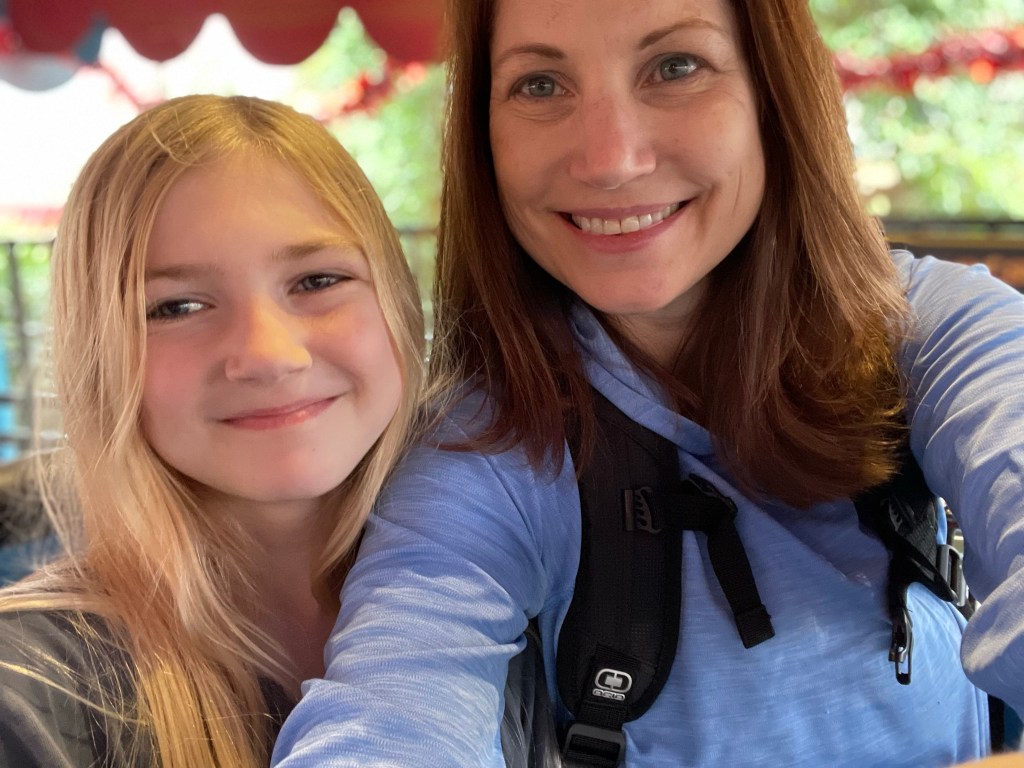
About to start a theme park ride, way outside my comfort zone, so I documented what I briefly thought might be the last ever photo of me. More wrinkles coming soon!