Tag: accountability

  • Praying for Peace

    May our troops in harm’s way be protected. May their loved ones at home be comforted. May the children listening to bombs and explosions and gunfire know in their heart that that’s not the way it’s supposed to be nor the way it has to be – may their fears be calmed this night and in the coming days and nights, and may they grow up to believe in and seek peace. May peace take control of the hearts and minds of all the people who want to wage war. May all who need to be held accountable be held accountable.

  • Votes and Compromises

    Votes and Compromises

    Three years ago today I saw these images for the first time. They were shocking, and they made me angry, and they just made me really sad. I simply could not believe that a country full of mostly good people would elect a man who so poorly treats and talks about women. A man who didn’t value commitment in marriage. A man who looked at wives as an adornment in the lives of men.


    A man who speaks about women like this: “We could say, politically correct, that look doesn’t matter, but the look obviously matters. Like you wouldn’t have your job if you weren’t beautiful.” And this: “Look at that face. Would anybody vote for that? Can you imagine that, the face of our next president? I mean, she’s a woman, and I’m not supposed to say bad things, but really, folks, come on. Are we serious?”

    See original article and pictures here.

    See more quotes and references here.

    I’m not really a good citizen. I know I should care, but I just do not when it comes to things like interference in the election and phone calls with government leaders. The days of my naive belief in a country of people with values that holds leaders to a high standard ended long ago, when Bill Clinton stayed in the White House after his impeachment. I was genuinely surprised at that outcome – I thought he’d been caught in his lies, then tried and impeached, and that the consequences would rain down and he would no longer be the President. I wanted him to leave the office, even though I’d voted for him. It was my first of many lessons about how government and politics actually work, and more importantly about what people are willing to sweep under the rug or conveniently forget so that they can get their way or so that they can live in a world that is not so hard and not so messy.

    We’re spending all this time and energy and money on research and investigations and hearings…to accomplish what? Impeaching another President who will not leave office?

    If we aren’t capable of making the choice to not vote for a man who believes these things about women, it feels like our problems are so much bigger and deeply rooted. We aren’t just on the wrong path. We aren’t even close to the path.

    I believe that one day we are all going to be accountable for how we voted (or failed to vote). We may have thought we made the best choice we could, we may have told ourselves and others we were actually voting against the other person, we may have voted for him because of a single issue we thought he would support and so we decided to vote for him because of that one issue. But when you vote for a person – when you support a person – you actually endorse them as a whole. You don’t get to pick and choose parts of them.

    You essentially say I’m willing to accept a compromise on gun control so that I can support people with pre-existing conditions always having access to health care. Or I’m willing to accept bigotry because I want a certain kind of supreme court justice. Or I’m willing to accept someone who commits adultery because I don’t want to vote for a person who supports abortion.

    Or in our personal lives…I’m willing to accept inappropriate behavior with employees or vendors because my business may be at risk if I fire them. Or I’m not going to call out my friend’s bad behavior because maybe then I won’t have a friend.

    Compromise. Compromise. Compromise.

    And yet the reality, with politics at least, is that we’re always choosing a candidate who isn’t perfect and all of the people in our daily lives are human.

    At the same time that I can acknowledge we’re all human, I’m just disgusted with our compromises. Disgusted by how the election worked out. Disgusted at the thought that people continue to support this lying man. Disgusted at our waste in these impeachment efforts and our partisanship while children are on lockdown in our schools fearful of a shooter and Americans can’t get insulin because they have to make a decision between meds and food. Disgusted that the person who represents our country is not someone I would ever want my children to emulate or even be in a room with.

    I think what most people want is a world that just does not require us to think about and confront uncomfortable things. We want a daily life where we ignore how the people around us behave because we’re too afraid to not have friends or to be left out or to be alone. We can’t imagine how our life or our business can be without someone or something, and so we settle. Or maybe we are hiding and need a world that does not hold us accountable, and so we hold others less accountable.

    We must all choose, literally every day, in what ways we’ll compromise. Will we vote for people who support health care if they also support tighter border policies? Will we choose to be a real friend and call out bad behavior in our friends and family, or will we offer what is actually our quiet acceptance of bad behavior because we’re too afraid to upset the peace? Will we choose what’s easier now or what is right?

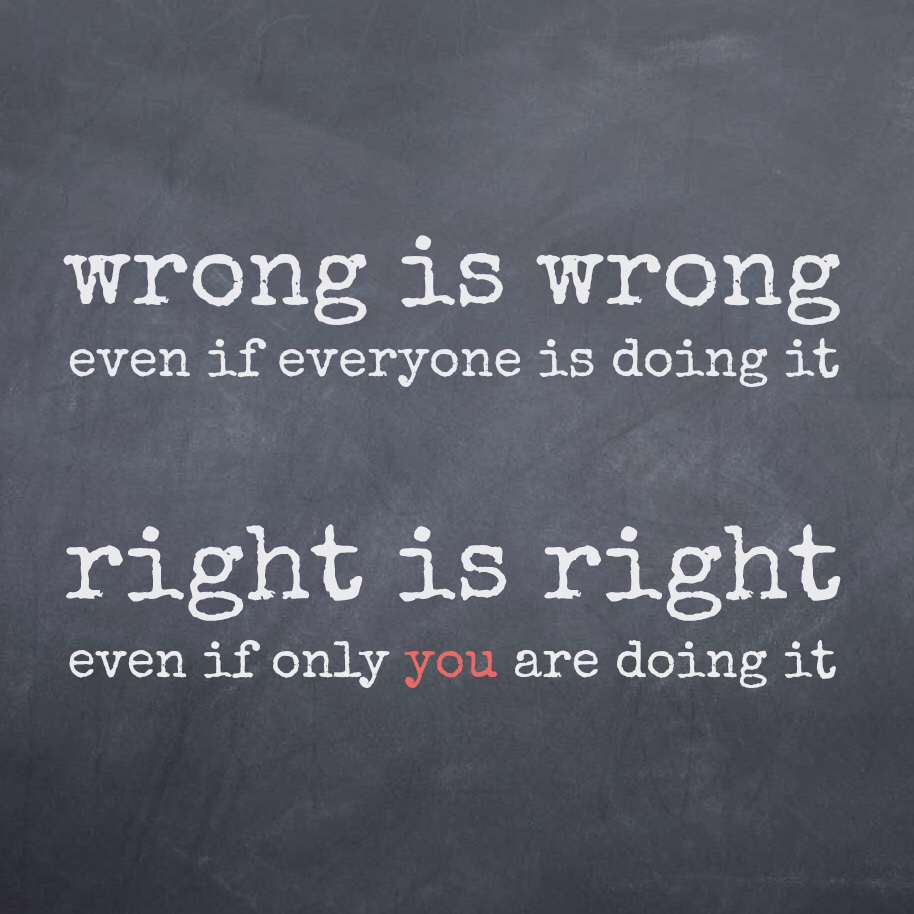
    We can’t keep thinking someone else will do something or someone else will say something. The reality is that we’re all going to have to compromise on some things but we have to be mindful when we do and we have to be able to explain it when we do. We have to admit what “whole” we accepted, not just focus on the parts we liked. And most importantly we must not compromise on the things that really matter – on the matters of right and wrong. We must always, always, always choose our children. And we must always, always, always choose right.

  • Forgiveness, Expectations, and Consequences

    Forgiveness, Expectations, and Consequences

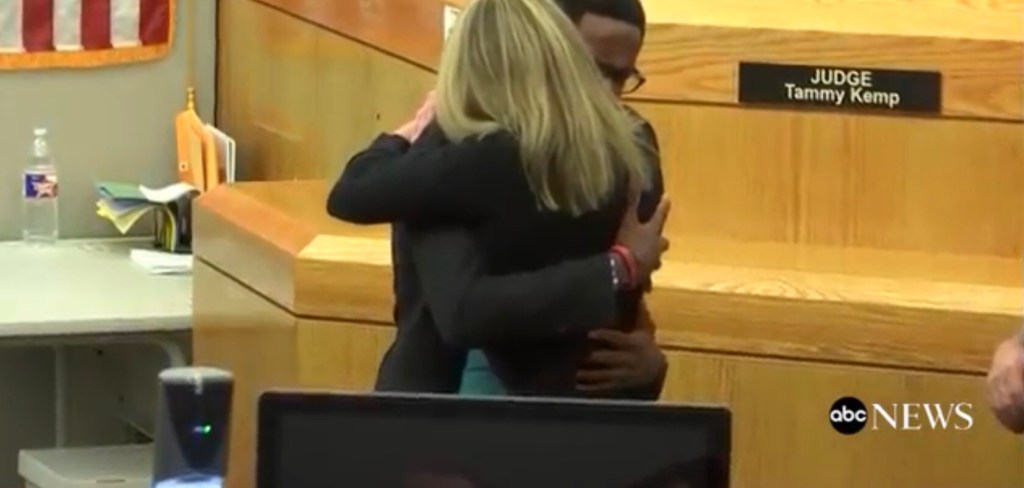
    I watched the Amber Guyger sentencing footage tonight, and all at the same time I am moved by Brandt Jean’s example and I am perplexed by Brandt Jean’s actions and I am annoyed by Brandt Jean’s words.

    Is Amber Guyger forgiven? Was the forgiveness Brandt Jean offered her the right thing to do? Does that really help anyone? Does it really mean anything?

    Because to me it feels like Amber doesn’t deserve forgiveness. That’s pretty un-Christian of me and yet it’s the truth about the thoughts and feelings bouncing around in my heart and mind.

    She doesn’t deserve forgiveness.

    Amber Guyger doesn’t seem like a good person who did something bad – she seems like a bad person who did something bad. And that matters to me. All people make mistakes and do bad things sometimes. Those acts fall into the bucket of forgiveable. But people who make conscious and deliberate choices to hurt others are bad, and people who focus on self more than anyone else are bad. For those who fall into the category of bad people who do bad things, it feels like forgiveness should be out of reach.

    The Amber in court seemed broken and frightened at times, but we know that her actions and reactions recorded by a body cam not long after she killed Botham Jean show another side of her. Perhaps the “real” her? That Amber doesn’t deserve forgiveness, because she was really only thinking about herself. That Amber doesn’t deserve forgiveness because she seemed sorry only about the coming consequences to her, not about the life cut short by her actions. That Amber was so caught up in herself and what happened to her that she didn’t try to help a man she shot – even her 911 call was about how everything related to her.

    While I feel like Amber Guyger is undeserving, a spirit deep within me also knows that none of us are worthy and yet all of us are worthy – and also that we are all forgiveable. And so watching Brandt Jean offer forgiveness to the woman who took his brother’s life is, more than anything I guess, just confusing.

    Watch Brandt Offer Forgiveness

    What initially struck me as I watched him speak is that he seemed to take his seat with maybe a rough idea of what he wanted to say. It didn’t really seem like he knew how far he was going to take it – he started down a path of I will not repay wrong with wrong, he faltered a bit as he really considered what he was doing and how that made him feel, and then he made a choice to lean in to his desire to forgive.

    Perhaps a desire to forgive took root in him in recent months or weeks. but had not been able to break the surface. Maybe he was fighting it, maybe others were encouraging him to fight it, maybe he had made deliberate choices to squash it. But once he started giving forgiveness a voice and it was out loud, you can see him finally embrace it. It’s like we actually watched a force grow and bust out with the speaking of just a few tough sentences.

    I respect and am deeply moved by Brandt’s personal decision to forgive, and at the same time his personal decision and display has real public impact and consequences. Amber somehow seems less accountable now, and that’s not OK. Amber somehow seems redeemed or less bad now, and that’s not OK. Amber somehow seems to “get off easy” now, and that’s not OK. Amber shot and killed an unarmed man and she will actually serve a lot less time than she should, a lot less time than seems fair, and a lot less time than others would.

    It also seems like each time we see a public display of forgiveness it just adds to this weird narrative that it’s a victim’s responsibility to forgive. It should not be our expectation that victims forgive or show compassion. It should be our expectation that bad actions are punished, that punishments are meted out fairly for all people, and that forgiveness is a personal decision each victim makes.

    Brandt Jean is brave, if for no other reason than he spoke publicly today during a very challenging and heartbreaking time for him. He faced a woman who hurt him and his family, he opened himself up for scrutiny and criticism, and he chose to forgive even though others in his family did not.

    Brandt Jean made a decision that his life and his words would not be about darkness and anger and evil. Perhaps the real decision he made today was simply choosing his own path- one that brings him peace. And so I end up in a place I hadn’t expected: it really doesn’t matter if Amber Guyger is deserving or not. The forgiveness Brandt extended and modeled is something that is all about him, and really has nothing to do with Amber.

    Maybe strong people aren’t the ones who forgive and forget, but the ones who remember and yet forgive. (unknown)

  • One Corner Piece


    Regret and Accountable.

    These two words have been running around in my head for months. Some days they are louder than others, but their noise is an almost constant hum in the background of my life.

    I didn’t behave inappropriately with someone else, I didn’t and don’t hide from all the people who might judge me or hold me accountable, and I didn’t and I won’t ever make excuses for behavior that is inexcusable.

    But you know what I did do? I ignored all the signs that something was very, very wrong in my marriage. I dismissed my ex and attempts to discuss issues because I just didn’t have any more effort to give to anything. I chose to focus on other people and things as the top priorities and that, in part, resulted in my divorce.

    When you have to suffer the consequences of your choices, it sucks – but as adults we do that and then pick ourselves up and move on. When you have children, and those children suffer the consequences of your actions and inactions, it’s the absolute worst feeling of failure and regret and accountability, and you just can’t shake it.

    Good parents can’t prevent chaos of all kinds and protect their children from everything, but they can stop themselves from creating chaos in the lives of their children.

    Regardless of how angry I have been and can still sometimes get at other people, the truth is that two people are responsible for the challenges my children have faced. Me and their Dad. Because as their parents, we are fully accountable for everything. Until they’re adults, we are the CEOs in their life. It was our job to provide for them and to protect them and to do our best in all things and to give 110% to family each day. It was our job to carefully control the influences in our lives. It was our job, and our job only, to set the example for them.

    I suppose all Moms and Dads have regrets. And secrets. One of my secrets is that I don’t regret getting divorced. Is it wrong to be happy about something that caused pain for your children? Is it wrong to feel free?

    I have known for a very long time, since the beginning really, that if I had to go back I wouldn’t make different choices. I would prioritize the people I prioritized. But I realized something new today. Something important. Something life-changing, really. A corner piece in this giant puzzle. One of the people I really need to forgive in this whole mess is me.

  • You’re Only Accountable for You, Brave Girls

    People are not responsible for the actions of others.

    We are all responsible for ourselves and our own actions, and I don’t know about you but that’s more than plenty of responsibility for me to manage.

    In the last few days I’ve watched Melania Trump and Hillary Clinton be questioned about the behavior of their spouses. And regardless of the answers they gave, why are we asking these women to comment on the behavior of their cheating husbands?

    Are we just that stinking nosey? Do we think they owe us an answer because they are public figures? Are we hoping they’ll break down and we’ll witness emotion from them? Are we thinking they’ll cry or show anger and that will justify the feelings we have that we project onto them?

    Are we hoping they will defend their husbands so that we can then throw in their faces how silly they are? Are we hoping they’ll say “I hate what he did” and thinking that if they say that, it suddenly changes everything?

    When we ask women to comment on the behavior of their spouses, we are asking them to account for their spouse’s behavior. Let me say that another way. When we ask women about the behavior of their spouses, we are asking them to be accountable for the behavior of their spouses.

    “To be accountable means to be subject to giving an account or having the obligation to report, explain or justify something.”

    Asking any woman to be accountable for a counterpart’s behavior (or vice versa) is just not acceptable in any way, shape or form. The questions alone imply she is accountable, and force her into justification in some way – and that’s really seriously wrong. And just mean, too. We are asking the person who was wronged to publicly comment on behavior she had nothing to do with – and we’re also asking her to defend her own response.

    Watching both interviews, I just wanted one of them to say “You know what? Your question is total BS. Ask me a question about me. Ask me about something I did or that I contributed to or that I control. Ask him about his behavior.”

    But you know what would happen if one of them did that? We’d call her a bitch. And we’d call her angry. Or we’d call her bitter. Or we’d wonder if she was a little overly emotional and unstable. And we might even say and think things like “well, no wonder.”

    We don’t just expect the wronged women to make excuses. We expect them to do it politely. We don’t just expect the wronged women to make justifications. We expect them to do it with poise. We don’t just expect the wronged women to deny allegations where there is clearly proof. We expect them to do it publicly with a grace and a calm that implies “no one would ever do that to me.”

    And if they don’t, we think something is wrong with them.

    If they don’t, we think something is wrong with the person who was wronged.

    I guess these interviews are just life in politics. Both of these women are choosing to be a part in that, and for that participation – and that participation alone – they are accountable. And yet part of me wonders if they would behave differently if even one woman before them had stood up in an interview and said “Your questions are about my husband’s behavior. Ask me about me.” Part of me wonders if they would have the courage to behave differently if more of us would respond to news outlets and say “Your questions are about her husband’s behavior. Ask her about her or I won’t read that.”

    We expect a lot more of these women than we should, and than we have a right to. We don’t just expect these wronged women to deny allegations where there is clearly proof. The absolute most awful thing we do is ask them to watch and listen while we spin tales of decades-long love where they overcame obstacles together and they triumphed above all. We expect the wronged women to perpetuate lies about love.

    These women know better than anyone that a story that includes a chapter where someone cheated is no love story. Maybe there’s a relationship story there, but there is no love story and there never was.

    IMG_E6217