Category: BraveGirlJournal

  • Kinda Prickly Brave Girl Wannabe

    It’s been a year. A year since everything changed for my family.

    I thought I’d wake up sad on the anniversary, but I didn’t. I’m not sure what that says about me and I’m sure a psychologist would have a field day with it, but it’s the truth and so it is what it is.

    I also thought I might wake up angry. I pray a thousand things for my girls every day and I pray only one thing for myself – please take away my anger.

    I think the most accurate description of my more recent demeanor came from a very funny coworker. Beth is better but she’s a little prickly…kinda like a porcupine. I seriously laughed out loud when I heard it. Porcupines have sharp pines to protect themselves and their children from predators, and the truth is I have been in prickly mode and have shot more than a few quills in the last 12 months. But those comments were honest and with affection, and I appreciate the people in my life who I can be totally honest with and who can be totally honest with me – and who call me out on my BS. It’s not easy being my friend, and I know it.

    I have been working on getting up each day and putting something positive in front of my eyes before I put my phone or social media in front of them. I fail at it regularly. I woke up this morning, on the anniversary of all of our change, and picked up my phone. Pinterest was what I had open last and that’s what came up when my screen saver went away. Only what I saw was not a post I’d been looking at yesterday. It was a completely new post and it had a scripture I don’t think I’ve ever heard or seen.

    Joel 2:25 – “I will restore or replace for you the years that the locust has eaten.”

    I looked up that verse across different versions of the Bible and the NIV says “I will repay you for the years the locust has eaten.”

    I don’t believe in coincidences. I believe that everything happens for a reason. We may not understand that reason for days or months or years, but there’s a reason. After a frustrating search I found my daughters’ greatest helper, an art therapist, through someone I met at a mutual friend’s house for just a couple of hours just a few weeks prior. There’s a reason that my ex and I elected to attend an annual party we have never gone to. There’s a reason that that which was meant to stay hidden in darkness was revealed.

    I don’t have all the reasons yet. But I know without a shadow of a doubt that I awoke to that verse for a reason. It’s a promise, and I have been repeating it over and over in my head all day.

    And you know what else? I’m not angry today. And that’s so weird because 24 hours ago I was pretty angry. But I have been at peace all day, and I have no explanation for it. I didn’t have a big cry or a big shouty catharsis or a big anything. I just woke up different, and I read “I will restore or replace for you the years that the locust has eaten.”

    I may have angry moments ahead and I may have sad moments ahead, but I also have happiness ahead. And I have contentment ahead. And I have freedom ahead. And I have wholeness ahead.

    I have restoration ahead. “I will restore for you…” Restoring is repairing, fixing, mending – that’s how we deal with things that are broken. Broken is not the end. Broken is fixable. The only reason for anyone to embrace brokenness is fear. Fear of doing the hard work. Fear of failing. Fear of being vulnerable. Fear of exposure. Fear of consequences. Fear we are not actually worthy. Fear we will find we are not actually fixable.

    Perhaps one of the most brave things any of us can do is embrace restoration. To face restoration we have to admit that we are fallible. We have to embrace our ability to be mad and sad and laugh and pick up a sword and slay dragons and roar all at the same time.

    Remember high school history class and looking at your textbook with pictures from The Restoration Period? It produced a lot of great art, and in many of those paintings you see people with swords. That’s because restoration involves a fight. And in a stroke of what’s-not-an-actual-coincidence, that just happens to be my name. Or rather, it’s my family name – the name that is about to be restored to me.

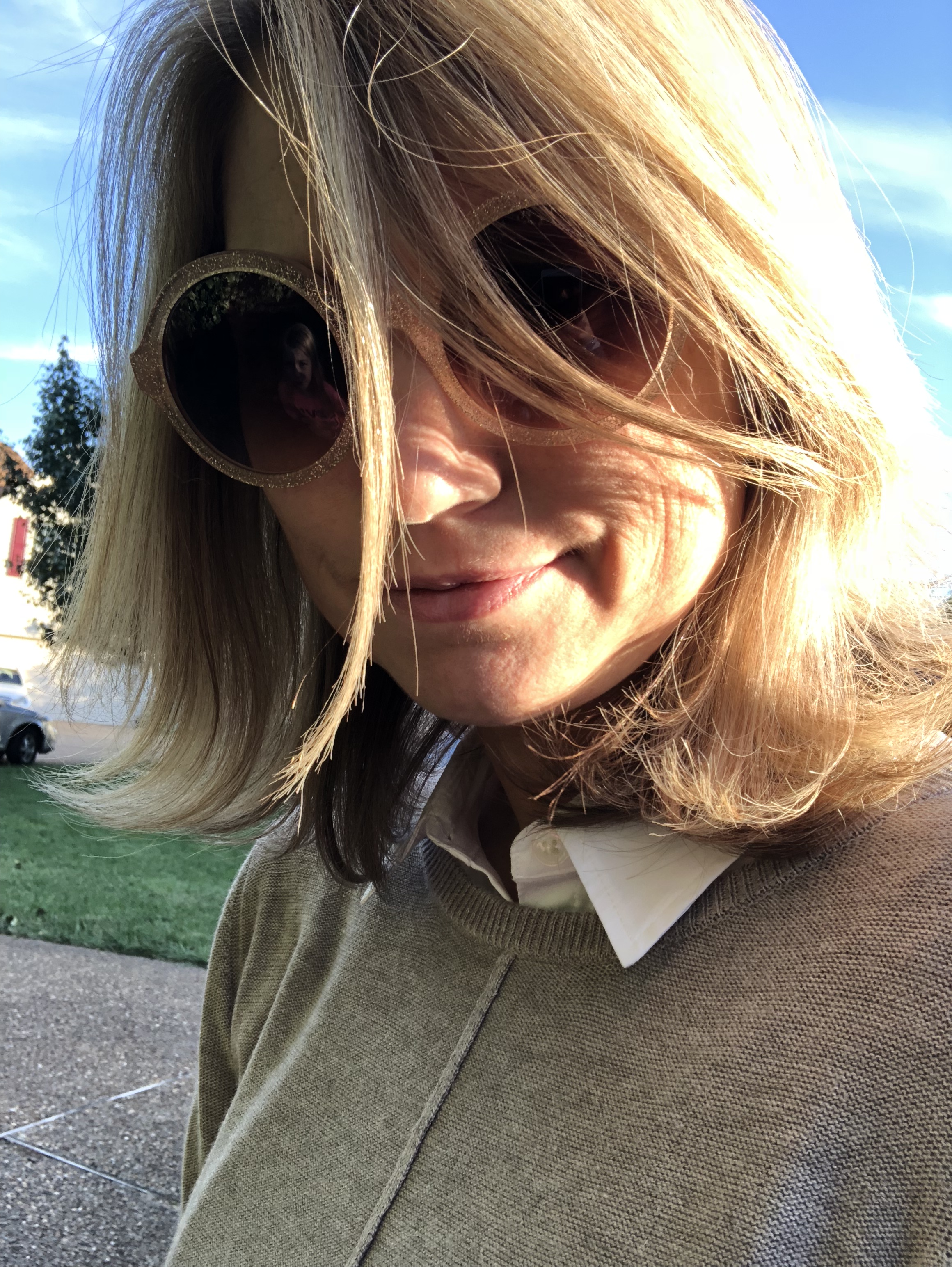
    On the last day that the Dembitz’s existed, he bought me fancy overpriced sunglasses. It was such a treat for me and I was truly delighted to get them. I can’t own expensive sunglasses, because I can’t be trusted with them – odds are that I will repeat history and I will sit on them and break them. (This has happened more times than I care to admit.) Those Tiffany glasses were returned long ago, during my days of cloudy sadness, without my ever wearing them because to me they represented a lie.

    And I did not think again about those glasses until now. My current sunglasses are on their last leg of a sad life in the seat of my car, where they regularly get sat on. On a whim and in that good mood I woke up in, I went shopping. I bought new overpriced sunglasses – purchased by me for me. They are gold and fancy and glittery, and totally outside of my comfort zone.

    I picked up my sword and restored something. You might even say that I restored one of the things that the locust had eaten.

    Brave Girls can buy their own damn sunglasses.

    IMG_6368
    Photo Assistance by Audrey
  • You’re Only Accountable for You, Brave Girls

    People are not responsible for the actions of others.

    We are all responsible for ourselves and our own actions, and I don’t know about you but that’s more than plenty of responsibility for me to manage.

    In the last few days I’ve watched Melania Trump and Hillary Clinton be questioned about the behavior of their spouses. And regardless of the answers they gave, why are we asking these women to comment on the behavior of their cheating husbands?

    Are we just that stinking nosey? Do we think they owe us an answer because they are public figures? Are we hoping they’ll break down and we’ll witness emotion from them? Are we thinking they’ll cry or show anger and that will justify the feelings we have that we project onto them?

    Are we hoping they will defend their husbands so that we can then throw in their faces how silly they are? Are we hoping they’ll say “I hate what he did” and thinking that if they say that, it suddenly changes everything?

    When we ask women to comment on the behavior of their spouses, we are asking them to account for their spouse’s behavior. Let me say that another way. When we ask women about the behavior of their spouses, we are asking them to be accountable for the behavior of their spouses.

    “To be accountable means to be subject to giving an account or having the obligation to report, explain or justify something.”

    Asking any woman to be accountable for a counterpart’s behavior (or vice versa) is just not acceptable in any way, shape or form. The questions alone imply she is accountable, and force her into justification in some way – and that’s really seriously wrong. And just mean, too. We are asking the person who was wronged to publicly comment on behavior she had nothing to do with – and we’re also asking her to defend her own response.

    Watching both interviews, I just wanted one of them to say “You know what? Your question is total BS. Ask me a question about me. Ask me about something I did or that I contributed to or that I control. Ask him about his behavior.”

    But you know what would happen if one of them did that? We’d call her a bitch. And we’d call her angry. Or we’d call her bitter. Or we’d wonder if she was a little overly emotional and unstable. And we might even say and think things like “well, no wonder.”

    We don’t just expect the wronged women to make excuses. We expect them to do it politely. We don’t just expect the wronged women to make justifications. We expect them to do it with poise. We don’t just expect the wronged women to deny allegations where there is clearly proof. We expect them to do it publicly with a grace and a calm that implies “no one would ever do that to me.”

    And if they don’t, we think something is wrong with them.

    If they don’t, we think something is wrong with the person who was wronged.

    I guess these interviews are just life in politics. Both of these women are choosing to be a part in that, and for that participation – and that participation alone – they are accountable. And yet part of me wonders if they would behave differently if even one woman before them had stood up in an interview and said “Your questions are about my husband’s behavior. Ask me about me.” Part of me wonders if they would have the courage to behave differently if more of us would respond to news outlets and say “Your questions are about her husband’s behavior. Ask her about her or I won’t read that.”

    We expect a lot more of these women than we should, and than we have a right to. We don’t just expect these wronged women to deny allegations where there is clearly proof. The absolute most awful thing we do is ask them to watch and listen while we spin tales of decades-long love where they overcame obstacles together and they triumphed above all. We expect the wronged women to perpetuate lies about love.

    These women know better than anyone that a story that includes a chapter where someone cheated is no love story. Maybe there’s a relationship story there, but there is no love story and there never was.

    IMG_E6217

  • Casting Cares for Dummies

    I need to start going up to the front of the church for Children’s Time. Maybe children’s messages have gotten better since I was a kid, or maybe I’m just in that developmental phase where mid-life people can only digest 2nd-grade style messages. But I get a lot out of what we should probably be calling Parables for Adult Dummies.

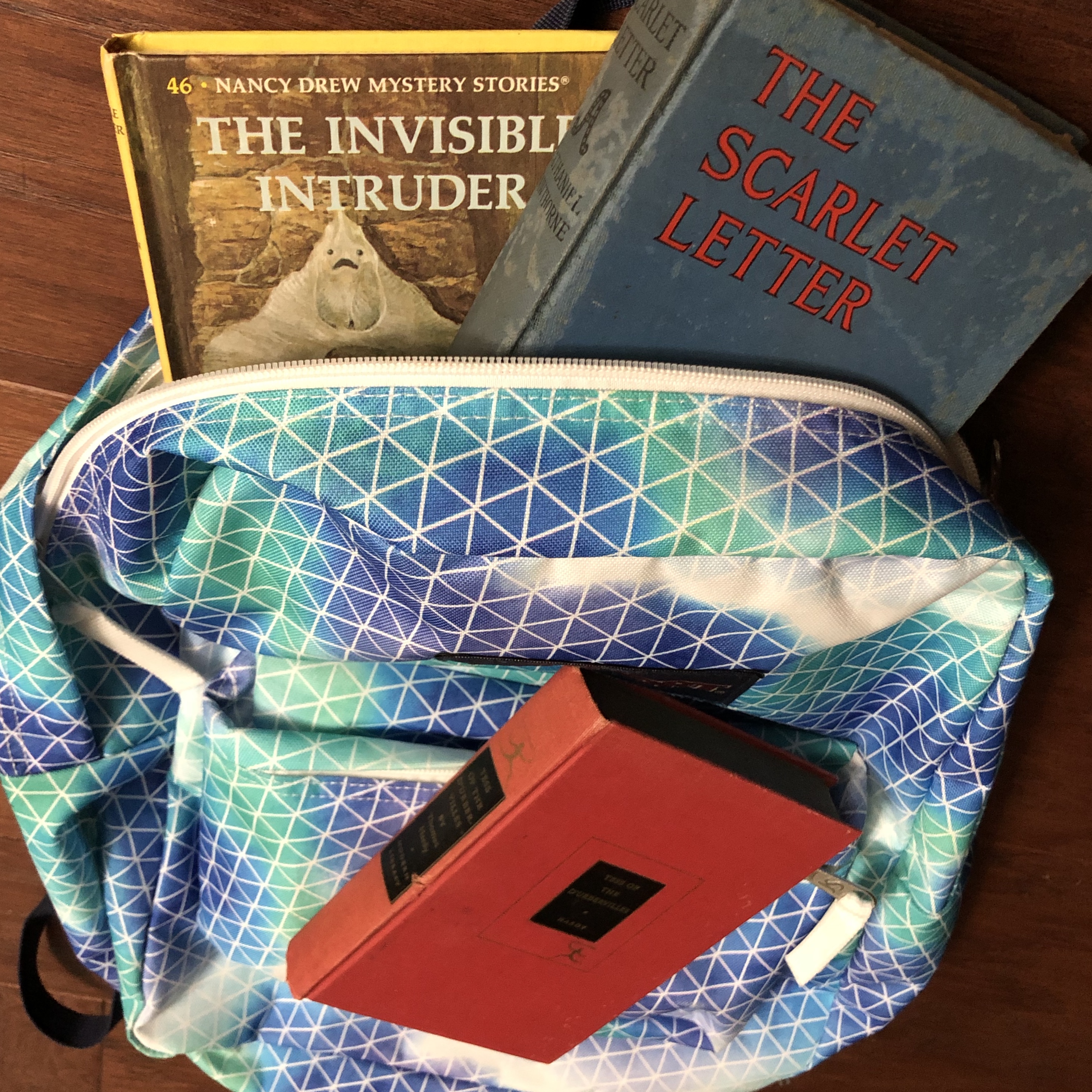
    Yesterday’s children’s message was about carrying more worries and burdens than we should. Big, heavy books about things like school and parents and friends and college went into a backpack that wasn’t designed to hold that much. Then the backpack wouldn’t close properly and the children took turns trying to lift the backpack, but they couldn’t. They couldn’t lift it because it was too heavy for them.

    One of the things I am really, really not good at is doing nothing. The whole idea of casting cares goes against every instinct in me. And I realized as I’ve given more thought  to the children’s message that I have a deeply-rooted belief that casting cares really equates to doing nothing – and it’s for people who are lazy or not accountable or not strong or all of the above.

    I am a project manager. A person who manages projects. A person who by nature organizes things into categories and lays out a plan of action. A list maker. A worker of puzzles. A builder of schedules. I’ve project managed pretty much everything in my life: thousands of work programs, house-hunting, lemonade stands, storm preparedness, marriage, divorce, and even Christmas decorations. If you think I’m kidding I can show you my three-tab divorce tasks spreadsheet or the last 5 years worth of Christmas preparation docs (which I keep for historical reference so I don’t repeat gifts and to ensure I remember all of the decorations that now won’t fit into one attic space).

    The point is, I like to have a plan. And casting cares seems like no action plan. And even more than that, casting cares seems like an inaction plan.

    I realized yesterday and today that just like with any work project, I examine my cares and decide which ones I’m going to handle – which ones go into the backpack – and which ones I’m going to delegate.  I manage my cares. Things I think I can control or fix on my own, I keep. And things I believe are outside of my control I talk to God about.

    Prepare for a hurricane? I got that. Buy water, take pictures of valuables, get the generator running, have a just-in-case evacuation plan.

    Prepare for flooding? I got nothing. If water is 10 feet high, I have no control. Dear God, it’s me Beth, and I need you to take that one.

    Medical procedure? I got that. Check references, check stats, research possible outcomes and options to decrease recovery time.

    Mom has a blood clot? I can’t heal people and surgery doesn’t fix that. Dear God, it’s me Beth, and I need you to take this one, too.

    I’m pretty sure that this is not at all how I’m supposed to be doing it. Peter doesn’t say cast your care when you run out of options, or cast the cares you can’t do anything about, or hey, you should just cast the most scary cares. He said cast ALL your care.

    I think of myself as a person who really has faith in God. But now I wonder if I have a lot more faith and trust in people and in myself than I do in God – that it’s only when I feel like I can’t really rely on me or some person or thing I trust that I actually cast my care. I think maybe handling things makes me feel brave, and maybe that’s not brave at all. Maybe that’s just competent.

    What if the absolute bravest thing I can do is to relinquish more and trust more, or even all? That doesn’t mean I don’t do what I can do – like gas up the generator before a storm – but it does mean I make a decision, or even repeated decisions, to fret less.

    What if the absolute bravest thing I can do is come to grips with the fact that really not much of anything is actually within my control?

    What if the absolute bravest thing I can do is make a decision every day, or even a hundred times a day, to enjoy my life even though not everything in it is going as expected?

    Remember that feeling of glee and freedom on the last day of school when the kids all got off the bus and started chanting “no more pencils, no more books…”

    What if the absolute bravest thing I can do and the way to be really free is to toss those remaining books out of my backpack?

    IMG_E5981

  • Fractured Forgiveness

    I have a habit of being in the middle of multiple books at one time. If one is a romance novel and one is biography of Mother Teresa and one is about the habits of highly successful people, I’m on pretty solid footing in terms of not confusing things in my mind. Books typically fall pretty easily into a category, and you can pick one up and dive right back in where you left off – almost right into the thought you had when you last put it down, just like when you turn off your car in the middle of a song and when you get back into the car you find yourself ready to sing the lyrics where the song left off.

    My work book club just finished reading Leadership and Self-Deception, and it has me not on solid footing. Every time I picked it up, I felt like I was lost a bit and couldn’t find my place. It was annoying and irritating, especially for what’s a pretty basic tale of two different kinds of people: people who are in a box (bad) and people who are not in a box (good). The premise is that people who are in a box can’t be good leaders because they are self-focused and not self aware. They don’t view others as they are or view the world as it is, and instead view everything in relation to self. People outside the box appreciate people and see their value and see them as they are.

    Today was our last discussion on this book and our group made lists of the character qualities for people inside the box and people outside of the box: inside people are limited and objectify and are judgmental, while outside people are listeners and are open-minded to new ways. As the character lists took shape something started to click in me, but it didn’t solidify and the annoyance persisted. So I left the meeting glad to see that book club end and glad to put that book on a shelf in my office.

    It wasn’t until an unrelated conversation with a smaller group of the same work friends that a realization started to really take root. We were laughing and telling old stories, and I jokingly said something cynical – and it hit me like a toilet from outer space in the first episode of Dead Like Me that the word “judgmental” applies to me.

    Mom Beth is outside the box. She encourages and praises and believes her girls can do anything. She does the same with all their friends – she wants these girls and everyone around them to believe that they can be and do anything. She has ways she likes to do things but she really works at letting her girls do things their own way and at their own pace.

    Work Beth is outside of the box. She loves the people in her office and is excited when they succeed and when they have new ideas. Work Beth is Mom Beth. She can’t say that at the office because it might offend some people – but she is a smiling, proud Momma each time they meet a goal.

    Christian Beth is outside the box. She loves different kinds of worship and talking about philosophy and she thinks that all different kinds of Christians will see each other in heaven – Baptists and Methodists and Unitarians and Catholics and Pentecostals and all sorts of others whose names I can’t recall right now. She believes the Bible and science can go together.

    Work Beth is Mom Beth is Christian Beth. Beth is the same no matter where you encounter her, and she is outside the box.

    But I realized today that that’s not really true recently, and that’s why I am annoyed at this book. There’s an Internal Beth, and that Beth is angry and that Beth is judgmental. Judgmental is an inside the box characteristic. The Beth that firmly believes a criminal deserves grace and can be forgiven cannot extend forgiveness to people who changed her children’s lives forever. The Beth that believes that all sin is equal in the eyes of God and the Beth that knows that she is not perfect and she is a sinner secretly harbors an equally firm belief that some people deserve lives filled with pain and misery.

    Self-Betrayal is clearly defined in the book: when you know how you should act and you choose to act differently.

    Coincidentally, I’ve been reading about and thinking a good bit about forgiveness. I just didn’t connect it all until today. I am well aware that I need to forgive. And yet, I am not there yet. And not only am I not there yet, I don’t even want to forgive certain people. So as awful as it is and as it sounds, the truth is that I am thankful for my own forgiveness and I don’t want to forgive all others. I only want to forgive as long as it’s within certain parameters and yet that’s just not how forgiveness works.

    Forgive us our trespasses as we forgive those who trespass against us…

    My forgiveness is fractured. It’s like a bone that’s cracked. And we all know what happens when bones are fractured and not properly treated. Pain and swelling and discomfort.

    I can’t decide if I think forgiveness is brave. Can something that’s mandatory also be brave? God calls us to forgive and so for me, words like expected and mandatory do not go with brave.

    And yet brave or not brave, I have to do something about forgiveness. Because fractures heal one way or another with time – properly or improperly. Doing nothing is a decision to choose a lifetime of complications.

    IMG_5685


  • The Stormiest Part of the Storm

    Hurricanes. Tornadoes. Earthquakes. Landslides. Fires. Volcanic eruptions. Diagnoses. Divorces. Death of loved one. Car accidents. Addiction. A child in trouble. War. Oppression. Terrorism.

    There are so many kinds of storms.

    People think I’m crazy for living in a place that’s prone to hurricanes. But I think it’s significantly more crazy to live in a place that’s prone to earthquakes. You don’t even know those are coming! Don’t even get me started on the level of crazy I think San Francisco folk have to be to leave their cars in potential cement death traps like parking garages. That’s just stupid C-R-A-Z-Y.

    With Florence headed toward the east coast, I’ve been thinking a lot about storms this week – storms we can prepare for versus storms we can’t. And what is the definition of storm, really? Is it just anything that is unsettling? Webster tells us storms can be a variety of things.

    • a disturbance of the atmosphere marked by wind and usually by rain, snow, hail, sleet, or thunder and lightning
    • a disturbed or agitated state, such as storms of emotion
    • a heavy discharge of objects, such as missiles
    • a tumultuous outburst
    • a violent assault on a defended position

    Perhaps the biggest storm of this week has been me. I am disturbed and in an agitated state and I have had outbursts. For the first time in two decades, I am facing a storm of weather that has the potential to greatly impact people I love and I have no one to rely on but me. No one to make decisions with. No one to second guess my logic or bounce ideas off of. No one to double check my list of to dos. If I make a bad decision about evacuating or don’t get enough food or water, people I love could really be impacted and it will solely be my responsibility and my fault. And that burden feels large.

    And you know what’s really silly? I have always really relied mostly on me because that’s just how I am, even when someone is standing next to me. Even if I had someone else in this house right now to bounce ideas off of and check my to dos, I would go with my gut on what to do and then blame myself if something went wrong. I’m a planner and I’m an organizer and I know that’s not everyone’s thing – and because I’m a little neurotic about lists and spreadsheets and planning (maybe more than a little neurotic), if something is missed or goes really awry, I am serious about going back through my checklist to figure out what the heck I was thinking.

    The one thing all storms have in common, I’ve decided, is that we truly can’t plan for them and they all kind of suck. OK that’s two things. Storms we don’t know are coming feel like a punch in the gut and that’s awful. But storms we can see looming on the horizon cause so much anxiety and stress that I think the knowing and waiting is actually the stormiest part of the storm. Is one kind of storm really any better than the other?

    We tend to define and even categorize whole time periods of our lives by storms. Life before a heart attack. Life after the death of loved one. Life before a job ended. Life after someone makes it to the other side of an addiction. Life before “the war.” Life after 9/11. Today is September 11, and with looking at just a few images I am easily transported right back to that day of surprise and uncertainty and overwhelming sadness. All of our lives have changed since that day – everything from our country’s foreign policy to air travel to our sense of overall safety within our borders.

    I tend to think of storms as an occasional small thing in the big scheme of things, but the truth is that storms are actually a pretty substantial part of all of our lives – and how we handle them and what we learn from them (or not) impacts the remainder of each of our lives greatly. One of the biggest lessons for me, and actually one of the great things about storms, is the way people come together to help and support one another. We see the worst of people in storms and we see the best of people in storms. Look for the helpers, Mr. Rogers would always say. Helpers are first responders, and helpers are family and neighbors and friends and teachers and doctors and nurses and counselors and people from Starbucks that we kinda know but not really, and even complete strangers.

    I allowed myself to get sucked into a pity party for a bit today. Because I forgot for a bit that it’s also my job to be a helper in a storm – to be a sister and a daughter and a neighbor and a company leader and a friend. I probably can’t get your generator working (God Bless Mark from Starbucks who helped me!), but I can call a friend who lives alone to make sure they have a plan and enough medicine.

    I allowed myself to get sucked into a pity party for a bit today, because I forgot for a bit that one of my jobs as a helper and as a Mom is to project calm and not add chaos. And in a moment of divine intervention at just the right moment today, I came across this gem – and I literally laughed out loud as I thought it might be easier for God to hush the waves of the sea than it is to still the Storm that is sometimes me.

    IMG_E5528