Tag: apologies

  • One Corner Piece


    Regret and Accountable.

    These two words have been running around in my head for months. Some days they are louder than others, but their noise is an almost constant hum in the background of my life.

    I didn’t behave inappropriately with someone else, I didn’t and don’t hide from all the people who might judge me or hold me accountable, and I didn’t and I won’t ever make excuses for behavior that is inexcusable.

    But you know what I did do? I ignored all the signs that something was very, very wrong in my marriage. I dismissed my ex and attempts to discuss issues because I just didn’t have any more effort to give to anything. I chose to focus on other people and things as the top priorities and that, in part, resulted in my divorce.

    When you have to suffer the consequences of your choices, it sucks – but as adults we do that and then pick ourselves up and move on. When you have children, and those children suffer the consequences of your actions and inactions, it’s the absolute worst feeling of failure and regret and accountability, and you just can’t shake it.

    Good parents can’t prevent chaos of all kinds and protect their children from everything, but they can stop themselves from creating chaos in the lives of their children.

    Regardless of how angry I have been and can still sometimes get at other people, the truth is that two people are responsible for the challenges my children have faced. Me and their Dad. Because as their parents, we are fully accountable for everything. Until they’re adults, we are the CEOs in their life. It was our job to provide for them and to protect them and to do our best in all things and to give 110% to family each day. It was our job to carefully control the influences in our lives. It was our job, and our job only, to set the example for them.

    I suppose all Moms and Dads have regrets. And secrets. One of my secrets is that I don’t regret getting divorced. Is it wrong to be happy about something that caused pain for your children? Is it wrong to feel free?

    I have known for a very long time, since the beginning really, that if I had to go back I wouldn’t make different choices. I would prioritize the people I prioritized. But I realized something new today. Something important. Something life-changing, really. A corner piece in this giant puzzle. One of the people I really need to forgive in this whole mess is me.
  • Thoughts Throughout a Day

    …in no particular order, all over the place just like my brain this week.

    An apology without change is just manipulation. (credit: unknown Pinterest person)

    Some people are more worried about what others think of them, how they are perceived by others, than they are about what kind of people they actually are. These people will never be committed to anything or anyone more than they are committed to self and their narrative.

    If you’ve built a narrative for a situation, you are the villain and not the victim.

    Intimacy requires spiritual unity. I had forgotten this.

    Politics and policies are argued by the privileged, who, because of their resources, largely don’t have to live with any of the consequences of their stance. They don’t worry about not having health care or what they’ll do if their daughter becomes pregnant because of a rapist – they have the ability and access to “fix” those things. The masses, who have limited or no resources, are left to live with the results of the discussions of the privileged.

    The Redemption Project with Van Jones really moves me.

    Click Here for a Redemption Project promo.

    Some people deserve the death penalty. It is unfairly meted out in our society, and until or unless we can fix that it shouldn’t be imposed. There are more people living in suburbia who deserve the death penalty than there are sitting on death rows who will be impacted by it.

    Collateral damage is the “unexpected, unintentional, and/or unavoidable losses accompanying or following an accident or failure.” In real life it is a nurse at urgent care, seemingly tending her own old wound that still needs healing, who grabs your hand and says, “People just don’t think.” In real life it is a child’s friend who is now afraid when her parents argue, and it’s also the parents of that child.

    Still thinking about the validity of this thought: People who can’t really look at themselves in a mirror are the ones who most often post selfies.

    Why are SO many people running for President?

    Hospitals see humans at their absolute best and their absolute worst. At birth and at death, and in all the messiness in between.

    There are really good people filling hospitals all around the world. People struggling for breath even though they’ve positively impacted the lives of thousands of people. At the same time, there are people who’ve hurt others that are making plans for the weekend. This life is sometimes seemingly unfair – seemingly” because people who’ve hurt others and whose lives are filled with narratives can never really rest in security. Not in this life or the next.

    Healing happens in hospitals, but it also happens on country roads, when your windows are rolled down and your music is loud.

    Freedom…Freedom…You got to give what you take…Freedom. Hold on to my freedom…

    Writing in a gratitude journal is an important exercise because it keeps me focused on the most important things. Going back to read old entries in my gratitude journal is even more important because it brings equanimity to my thoughts in a matter of moments.

    I recently found the Bible I used during my teens and twenties. It’s filled with highlighted lines and earmarked pages. The forty-five year old me scanning what’s underlined easily sees this was the resource of an anxious young woman who made many, many mistakes. I am so thankful to find a book with pieces of my story – pieces of me – that I’d forgotten. It’s documentation of my progress in some areas and my lack of progress in others.

    When I’m a big girl, a real adult, I want to publish a book. I’m writing pieces now, but they need to get much, much better. The pieces are like the daily training runs in preparation for a marathon.

    Should I change my kitchen cabinets from white to blue?

    Fatigue caught up with me today. That always happens when danger passes.

    I’m going to keep being me. She’s not perfect, but I like her.

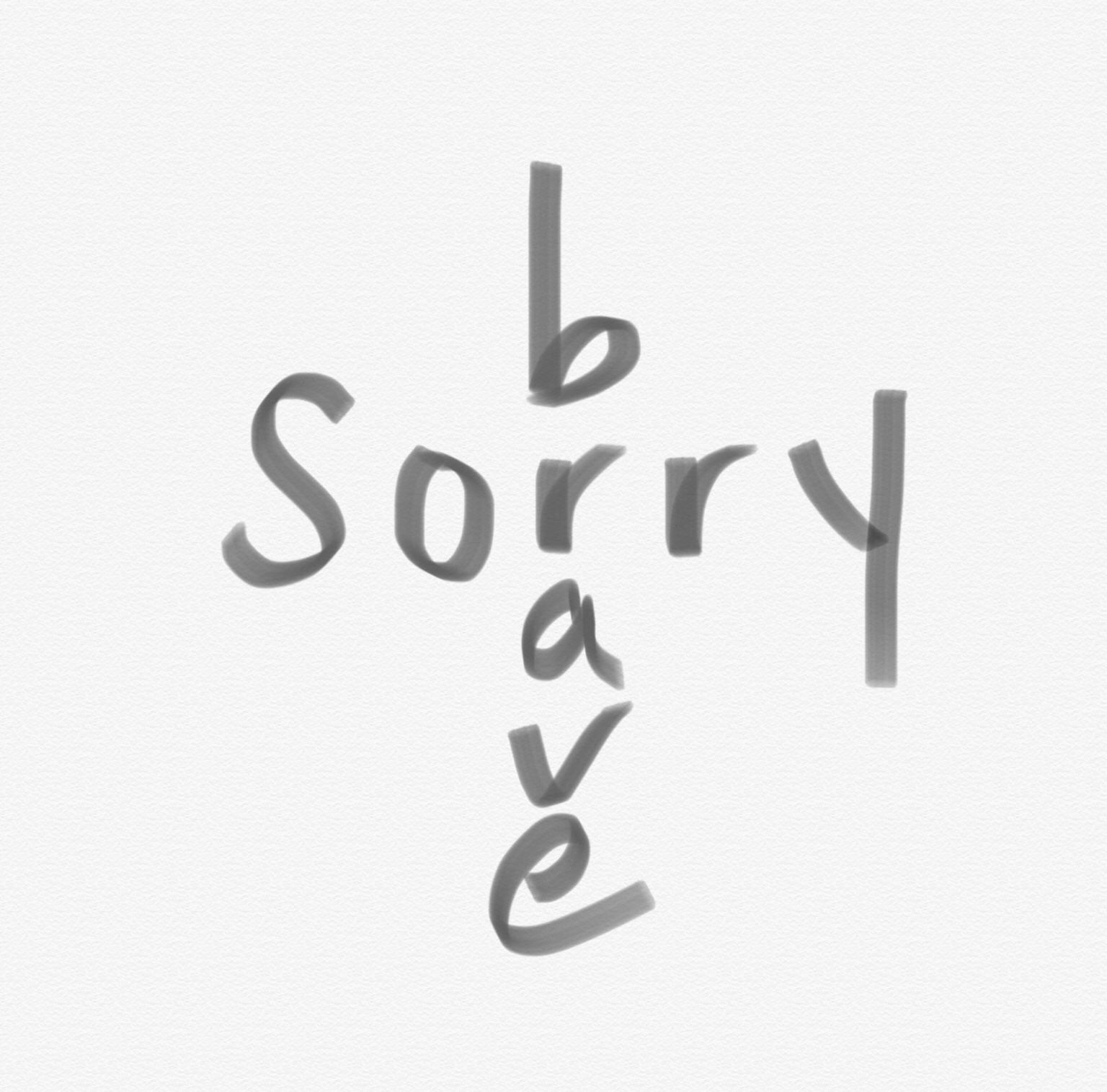
  • Sorry is Brave

    Sorry is a word.

    Sorry can go from a word to a feeling.

    Sorry can go from a feeling to a behavior.

    It’s that action, in the behavior step, that separates the phony from the authentic.

    Sometimes we say we’re sorry when we don’t really feel it or before we feel it. Sorry is not a word that we wield just to end discomfort or conflict. It’s brave to vulnerably say we’re sorry when we’ve wronged someone or behaved badly. It’s the opposite of brave – it’s cowardly – to say we’re sorry when we don’t mean it, as a method of avoiding further discomfort.

    People who are truly sorry make it to part two, which is a feeling. It’s called remorse. When someone truly feels remorse for something, they apologize by saying the actual words I’m Sorry because they feel regret about what they’ve done. And then the words of apology are followed by action.

    The words themselves aren’t always really necessary, although in some cases the words provide an element of healing for all involved. If the words are offered, the word choices and the way the words are delivered speak volumes.

    Sorry is never accompanied by an excuse. It doesn’t give reasons. It takes accountability without reasons and excuses.

    Sorry never says but. It never says if only. It never points to others. It never hides behind pieces of the truth.

    Sorry doesn’t gather up an audience. Sorry quietly and consistently shows the wronged their commitment to behave differently.

    Sorry behaves differently.

    Sorry identifies all behaviors that cause stress in the lives of those who were hurt and takes every action to stop adding stress. It does that regardless of the stress and challenges that may add to the life of the one who’s sorry.

    When lives have been irrevocably altered because of our behavior, Sorry seeks actual help. Sorry doesn’t just hope for the best, it seeks professional help even though the thought of help is scary. That act of bravery is important even if we live a mostly solitary life, because each of us is a person who has value and who contributes to the universe. But that act of bravery is especially important if we’re a parent, because we need to show our children that we’re committed to healing – theirs and our own.

    Truly sorry is an action, and it’s brave.